
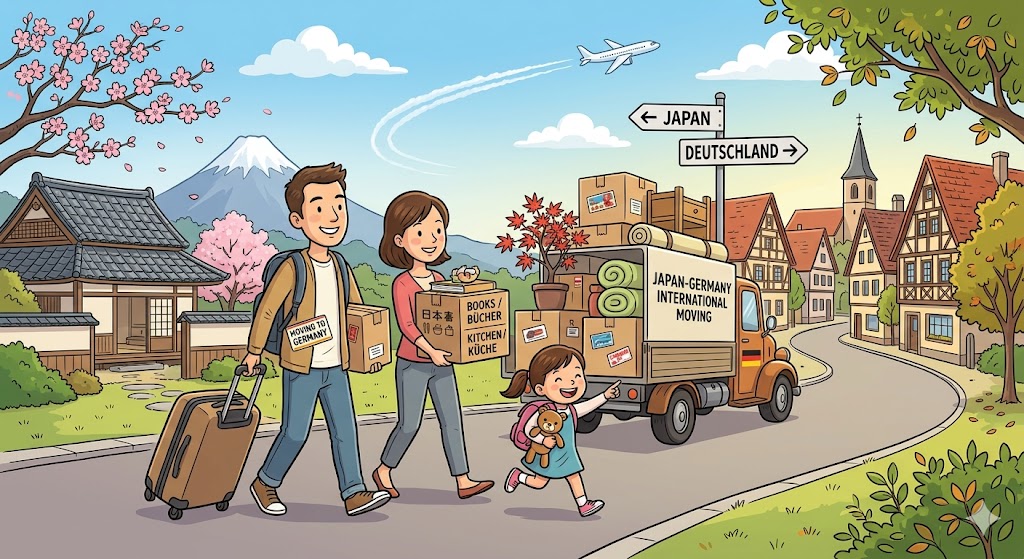
Relocating from Japan to Germany is a major life transition that involves moving across continents, navigating strict customs regulations, and managing complex international logistics. To ensure your household goods, personal effects, and sentimental items arrive safely at your new European home, a structured and professional international moving framework is essential.
An effective intercontinental move relies on a comprehensive, strategic approach to transport, handling, and coordination.
1. Pre-Move Assessment and Custom Packing Solutions

The journey from Japan to Germany covers thousands of miles, meaning your belongings will experience significant movement, temperature shifts, and handling. Standard domestic packing is insufficient for this scale of transit.
-
Export-Grade Packing: Professional moving services utilize heavy-duty, double-walled corrugated boxes, specialized wooden crates for fragile items (like artwork, ceramics, or musical instruments), and moisture-absorbent materials to protect against ocean humidity.
-
Volume Evaluation: An initial survey—often conducted via a detailed digital walkthrough or an in-person assessment—accurately measures the total volume in cubic meters or cubic feet. This precise measurement dictates the choice of shipping containers and packing resources.
2. Choosing the Right Mode of Transport
Depending on your timeline, volume of goods, and specific requirements, international relocation services offer two primary modes of freight:
Ocean Freight (Sea Shipping)
This is the most common and cost-effective method for shipping full households or large volumes of furniture.
-
Full Container Load (FCL): You retain exclusive use of a 20-foot or 40-foot sea container. This is ideal for entire apartments or houses, allowing direct sealing of the container at your residence in Japan.
-
Less than Container Load (LCL / Groupage): Your packed goods share container space with other shipments headed to Europe. This is a highly efficient choice for smaller shipments where you only pay for the specific volume your items occupy.
Air Freight
Air transport is designed for time-sensitive essentials, such as professional equipment, clothing for the immediate season, or urgent documents. While it offers rapid transit times, it is typically reserved for smaller, higher-priority shipments due to capacity limitations.
3. Customs Clearance and Compliance Regulations
Navigating customs is one of the most critical phases of moving from Japan to Germany. The European Union maintains strict regulations regarding the importation of personal effects.
-
Duty-Free Importation: Generally, you can import your used household goods into Germany duty-free if you have been residing outside the EU (in Japan) for at least 12 consecutive months, and you have owned and used the items for at least 6 months prior to relocation.
-
Documentation Framework: A successful customs clearance requires meticulous documentation, including a comprehensive English or German packing list, a valid passport, a German residence registration (Anmeldung), a copy of your employment contract or university enrollment in Germany, and the completed customs form (Form 0350).
Professional moving coordinators oversee this entire compliance process, ensuring all paperwork is submitted correctly to minimize any risk of port delays.
4. Experienced On-Site Personnel and Ground Handling
The human element is vital to a seamless relocation. In Japan, packing and loading teams operate with high technical precision, respecting local residential rules and utilizing protective building padding to prevent property damage during move-out.
Upon arrival at European ports (such as Hamburg or Bremerhaven), the shipment is managed by experienced German logistics personnel. These ground teams handle customs release, container drayage, and final road transport to your destination city, whether it is Berlin, Munich, Frankfurt, or Düsseldorf.
5. End-to-End Tracking and Communication Management
Relocating across hemispheres requires constant visibility. International moving services utilize centralized tracking systems to keep you informed of your shipment’s milestones. From the moment the container leaves a Japanese port (such as Tokyo, Yokohama, or Kobe) to its journey through global shipping lanes and its arrival in Germany, you receive regular updates. Dedicated move coordinators act as a single point of contact to answer logistical questions and synchronize delivery dates with your housing availability in Germany.
6. Destination Services and Settlement Support
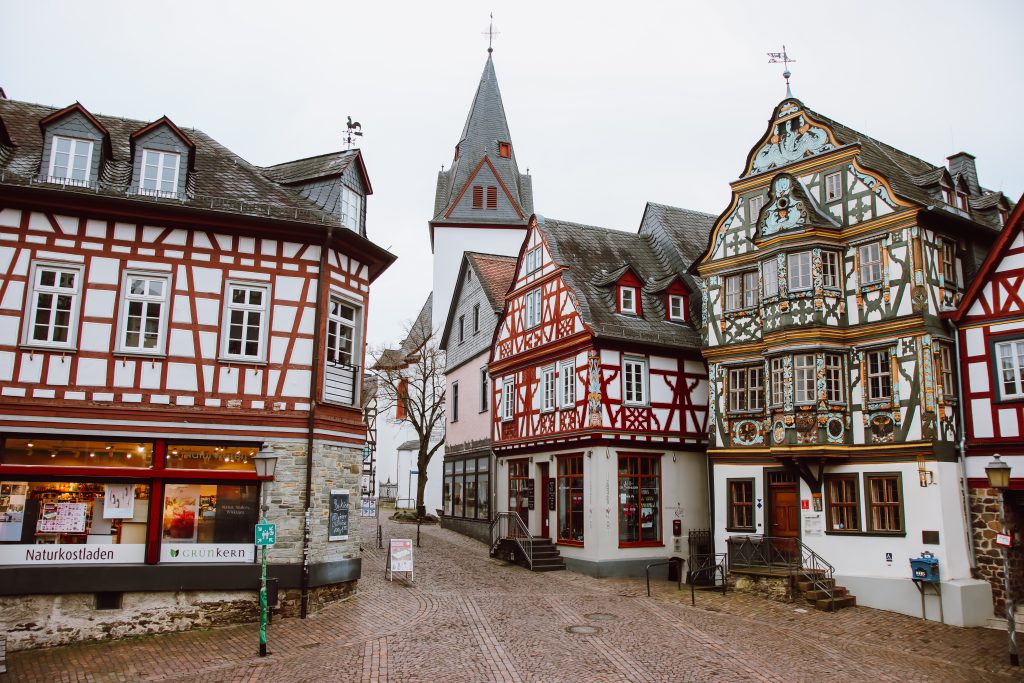
A true door-to-door moving service extends beyond merely dropping boxes at your new doorstep. The final phase of delivery in Germany focuses on helping you settle into your new environment efficiently.
-
Inside Delivery: Moving crews carry boxes and furniture directly into your specified rooms, navigating European stairwells or apartment lifts.
-
Unpacking and Assembly: Services frequently include the basic reassembly of standard furniture (such as beds and tables) that were dismantled in Japan, alongside the systematic unpacking of fragile items onto flat surfaces.
-
Debris Removal: Once the unpacking phase is complete, the crew collects and disposes of all used packing paper, cardboard, and crating materials, leaving your new home clean and organized.
7. Conclusion
Moving from Japan to Germany involves a sophisticated logistical network, precise customs synchronization, and meticulous handling. By relying on a structured international moving process—anchored by export-grade packing, clear transport strategies, and comprehensive door-to-door coordination—you can transition smoothly between these two cultures, confident that your household goods will arrive safely at your new European destination.
For inquiries, tailored logistics planning, and expert assistance regarding your upcoming relocation from Japan to Germany, please connect with our support channels:
-
Hotline: 0904 675 115
-
Zalo: 0907 411 933
View more:
Solar panel transportation from Long An to Khanh Hoa
Office and warehouse relocation services
Detailed comparison: DIY moving vs. Full-service relocation
