

Moving house in Vietnam is easier when you agree on the details before moving day. A short trip can still involve narrow lanes, building rules and delicate furniture. For expats, clear written communication also helps prevent misunderstandings about the price and the work included.
This guide explains how to prepare an inventory, compare quotations and organise a domestic move. It covers packing, access, delivery and handover. Viet Moving House can review your addresses and belongings before advising on a suitable plan. Service availability and timing must be confirmed for your specific move.
Start with a clear moving inventory
First, walk through every room and list what you intend to move. Separate large furniture, appliances, fragile items and packed boxes. Include items stored on balconies, in cupboards and in shared storage areas. A simple spreadsheet or numbered checklist is enough.
Next, photograph each large item and measure anything that may not fit through a doorway. Give the mover useful dimensions, rather than describing a sofa as large. Note whether furniture can be dismantled. Also mention glass panels, heavy stone surfaces and items with a high declared value.
Finally, divide your belongings into three groups: items to move, items to leave and items to carry yourself. This reduces confusion during packing. Keep passports, money, jewellery, medication and essential documents with you. Back up important electronic files before disconnecting computers.
Check access at both addresses
When moving house in Vietnam, access can affect the plan as much as distance. Send clear photos of the entrance, stairs and route from the building to the parking area. Explain any narrow turns, low overhead clearance or long carrying distance.
For an apartment, contact building management before confirming the move. Ask whether you need to reserve a service lift or register the vehicle. Confirm the permitted moving hours and any protection required in shared areas. Any building charge or refundable deposit should be identified separately.
At the new address, repeat the same checks. A truck may reach one property easily but require a smaller transfer vehicle at the other. Do not assume both buildings follow the same rules. Share the contact details of the person coordinating access at each end.
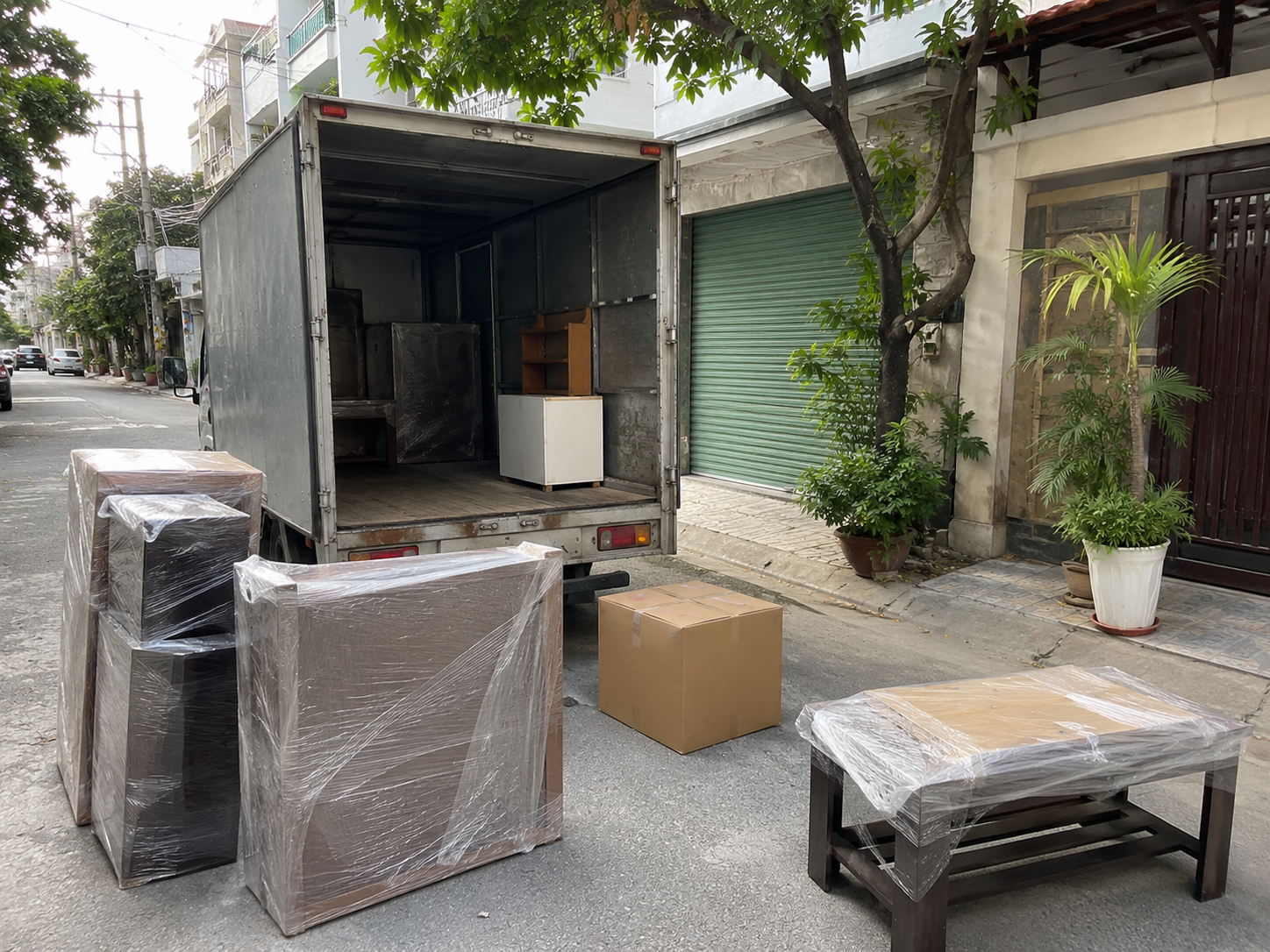
Compare the scope before comparing the price
A useful quotation describes the work, rather than giving only a total. Ask each provider to quote against the same inventory and access information. Otherwise, a lower figure may simply exclude packing, dismantling or unloading.
Check the following points before accepting a domestic moving quotation:
- Packing labour and the types of materials included.
- Furniture dismantling and reassembly within the agreed scope.
- Loading and unloading at both addresses.
- Vehicle arrangements and any transfer between vehicles.
- Waiting time, carrying distance and access restrictions.
- Building charges, parking fees, taxes and other exclusions.
- Payment stages and how changes will be approved.
There is no single price that fits every household. Volume, handling requirements, distance and access all matter. A small apartment with difficult stairs may need more labour than a larger home with easy access. Ask for an updated quotation if the inventory or delivery address changes.
For an initial assessment, use the Viet Moving House quotation page. Send the actual collection and delivery addresses, planned date and inventory. Photos help the team identify questions before a survey or a final quotation.
A practical five-step moving process
1. Share information and confirm the survey
Provide your inventory, photos and access details. Then agree on the most suitable survey method. Video may help with a straightforward move. A complex property or unusual item may need a closer assessment before the scope can be confirmed.
2. Approve the written plan
Confirm the moving date, expected arrival window and included services. Ask who will coordinate the crew and receive your instructions. Record any exclusions and the procedure for approving extra work. Keep a copy of the agreed plan available on moving day.
3. Pack and label by room
Group items by room and label each box with a number and destination. Mark fragile boxes clearly. Avoid placing heavy items over delicate contents. Small fittings from dismantled furniture should be bagged, labelled and kept with the relevant item.
4. Load and transport with care
Before loading, compare the prepared inventory with the items at the collection address. Point out anything that must remain behind. The loading plan should account for weight, dimensions and protection. For longer journeys, agree on an estimated delivery window and a contact method.
5. Check and sign the handover
At delivery, count the boxes and inspect important furniture before confirming completion. Test any reassembly included in the service. If you notice a problem, record it promptly with photos and a written description. Follow the agreed claims procedure and keep the supporting documents.

Protect fragile items and personal essentials
Wrap plates, glasses and ornaments individually. Use suitable dividers or cushioning, and fill empty spaces inside boxes. The outside label should identify fragile contents. It should also show which room will receive the box.
For televisions and monitors, use the original packaging when available. Otherwise, discuss suitable protection for the screen and corners. Do not assume an ordinary blanket is enough for every surface. Tell the mover about fragile finishes and existing damage before packing begins.
Prepare a separate essentials bag for your first night. Include chargers, toiletries, clean clothes, drinking water and necessary medication. Keep keys and building access cards close at hand. If you have children or pets, arrange a safe space away from the loading route.

Plan differently for local and intercity moves
For a local move, focus on vehicle access, lift reservations and the time available for loading. Even a short route can take longer than expected if the truck cannot park nearby. Build some flexibility into the day instead of scheduling several appointments immediately after delivery.
For an intercity move, confirm the collection date, expected journey and delivery arrangement. Ask whether the quotation is based on a dedicated vehicle or another agreed option. Clarify whether belongings will be transferred between vehicles. Also agree on how you will receive updates if the schedule changes.
If your journey involves the capital and southern Vietnam, the Vietnamese article on moving from Hanoi to Ho Chi Minh City provides additional route context. Confirm the current arrangements directly for your shipment.
Moving house in Vietnam: a simple preparation checklist
- One week before: confirm the inventory, compare the written scope and coordinate building access.
- Two days before: label boxes, separate items you will carry and confirm the contact person at both addresses.
- The evening before: prepare your essentials bag, charge your phone and keep the agreed documents accessible.
- Before departure: count the items, photograph their condition and check rooms and cupboards again.
- At delivery: inspect the belongings, record any discrepancy and complete the handover checklist.
Questions expats often ask
Can I get a quotation without a survey?
Photos and an inventory can support an initial estimate. However, the final scope depends on the belongings and access conditions. Ask what information is still needed before treating an estimate as a confirmed quotation.
Does full-service moving include every technical task?
No. The included work is the work confirmed in writing. Air-conditioner removal, electrical work, lifting through a balcony or handling a heavy safe may need separate assessment. Mention these requirements early and request written confirmation.
Are all belongings automatically insured?
Do not assume that every item has full replacement cover. Ask about the applicable protection, exclusions, declared values and claims process. Keep the service agreement and inventory. Confirm any additional cover before moving day if it is available and needed.
Does this guide cover international customs?
This article covers domestic moving within Vietnam. An overseas relocation needs separate planning for transport, customs and destination requirements. Tell the team if your domestic move is part of a wider international journey so the handover can be assessed properly.
Request a moving plan from Viet Moving House
Ready to discuss moving house in Vietnam? Send your pickup address, delivery address, preferred date, inventory and packing needs. Include photos of large furniture and access points. The team can then review the requirements and confirm the next step.
Đoàn Ngọc Quang (Mr Domino) – Viet Moving House
Hotline: 090 467 5115
Email: cargo@indochinapost.vn
Or send your request to: https://www.facebook.com/groups/1913349573401732
